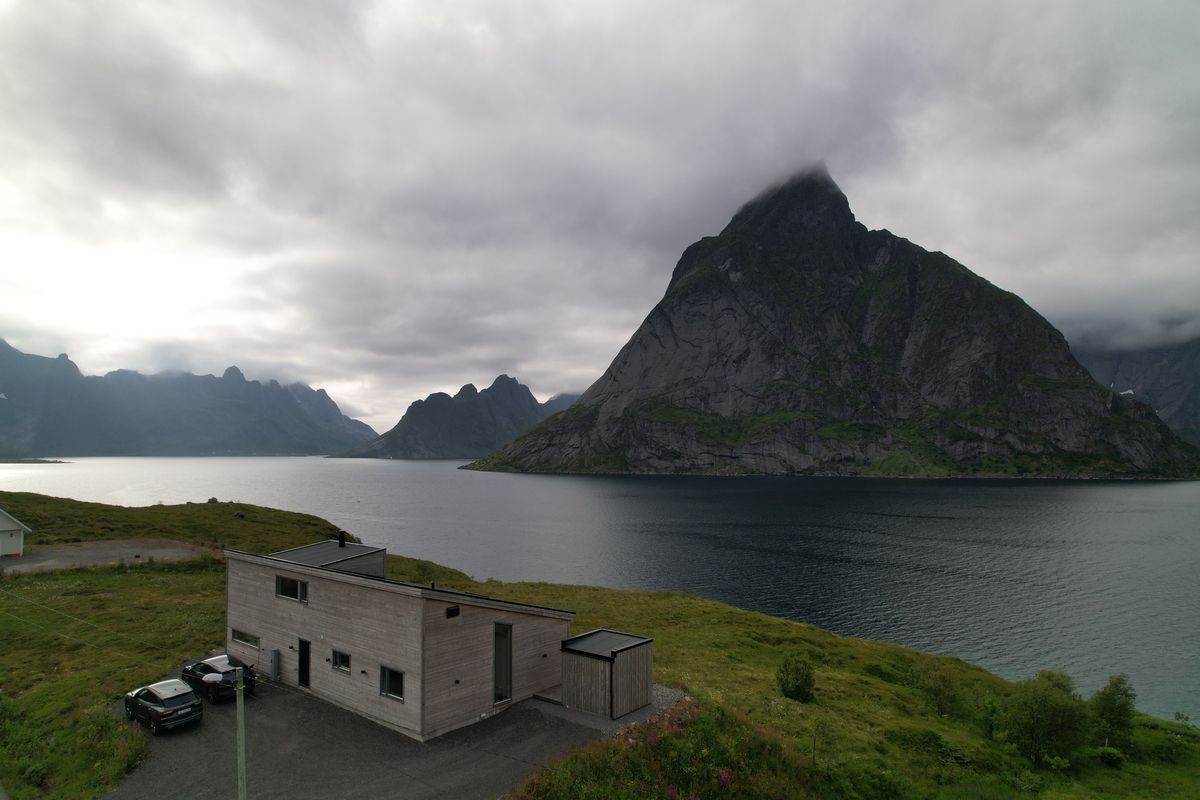
For dramatic mountains, Reinebringen and the famous villages, stay in the west around Reine. For shorter drives in every direction, Henningsvær and Svolvær, stay in the middle of the islands (Vestvågøy/Austvågøy). With a week or more, split your stay: 3–4 nights in each. For the northern lights, both work – what matters is a dark spot with a view north.
The first question before any Lofoten trip: where to stay? Lofoten looks small on a map, but it's a chain of islands strung along one road, and where you base yourself shapes your whole trip. Here's how we think about it – as people who own houses in both places.
The two halves of Lofoten
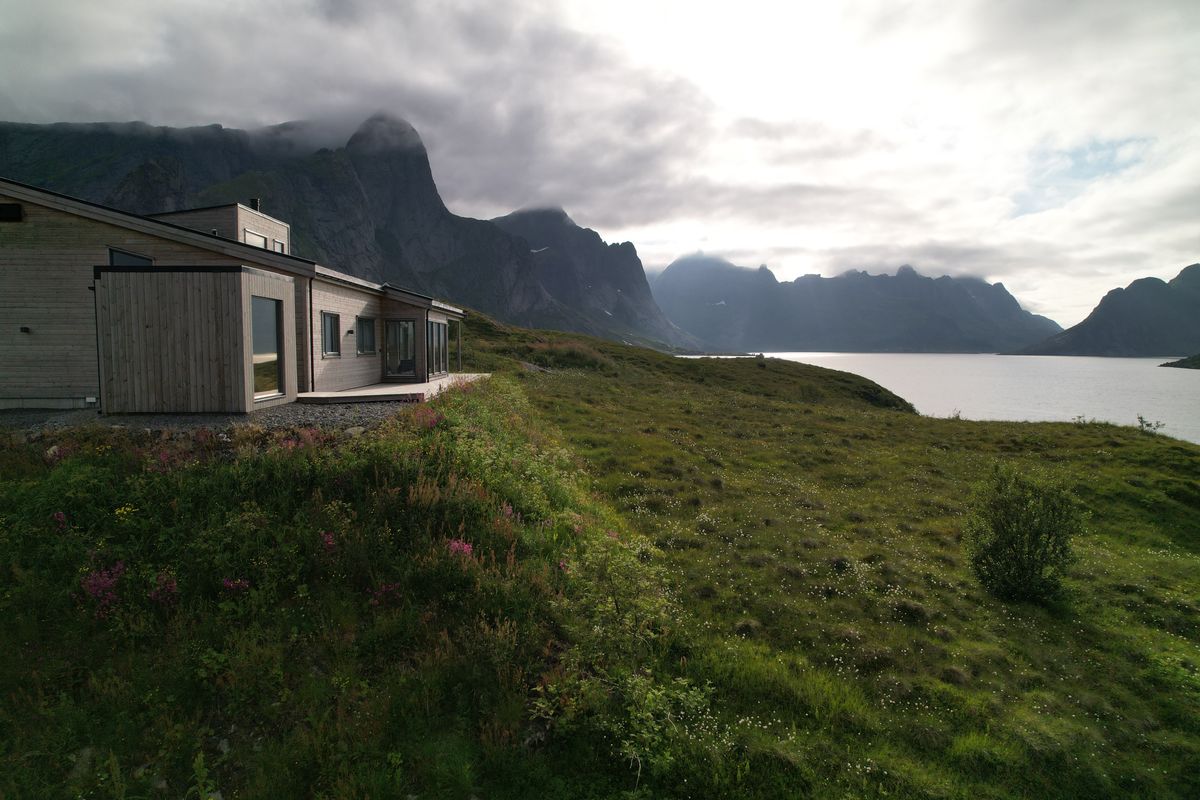
The west – Moskenesøya and Flakstadøya. This is the Lofoten from the posters: Reine, Hamnøy, Sakrisøy, Å. Granite peaks rise straight out of the water, the villages cling to the shore, and the famous hikes – Reinebringen, Ryten, Kvalvika, Bunes – are all here. It's dramatic, steep and, in summer, busy.
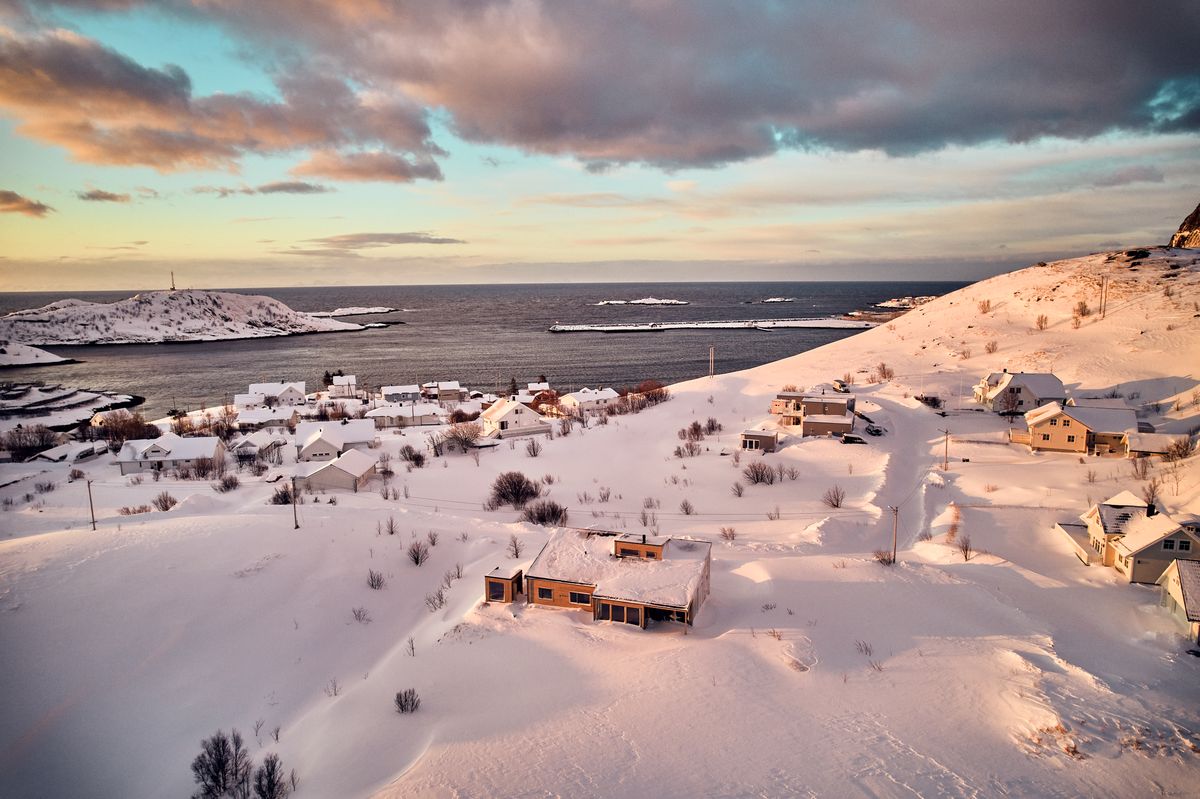
The middle – Vestvågøy and Austvågøy. Henningsvær, Kabelvåg, Svolvær, the beaches at Haukland and Uttakleiv, the open skies of Gimsøy. The landscape is a bit softer and wider, the drives in every direction are shorter, and there are more restaurants and services.
Stay in the west if…
- You want to wake up in the postcard.
- Hiking is your main goal – the classic trails are on your doorstep.
- You arrive by ferry from Bodø (it lands in Moskenes, close to Reine) or fly into Leknes.
- You're a photographer who wants to be on location at sunrise.
The house in Reine is just above the village, on its own plot with an unobstructed view over Reinefjord, and the Reinebringen trail starts within walking distance.
Stay in the middle if…
- You want short drives to many different places rather than one spectacular corner.
- You fly into Svolvær or Evenes.
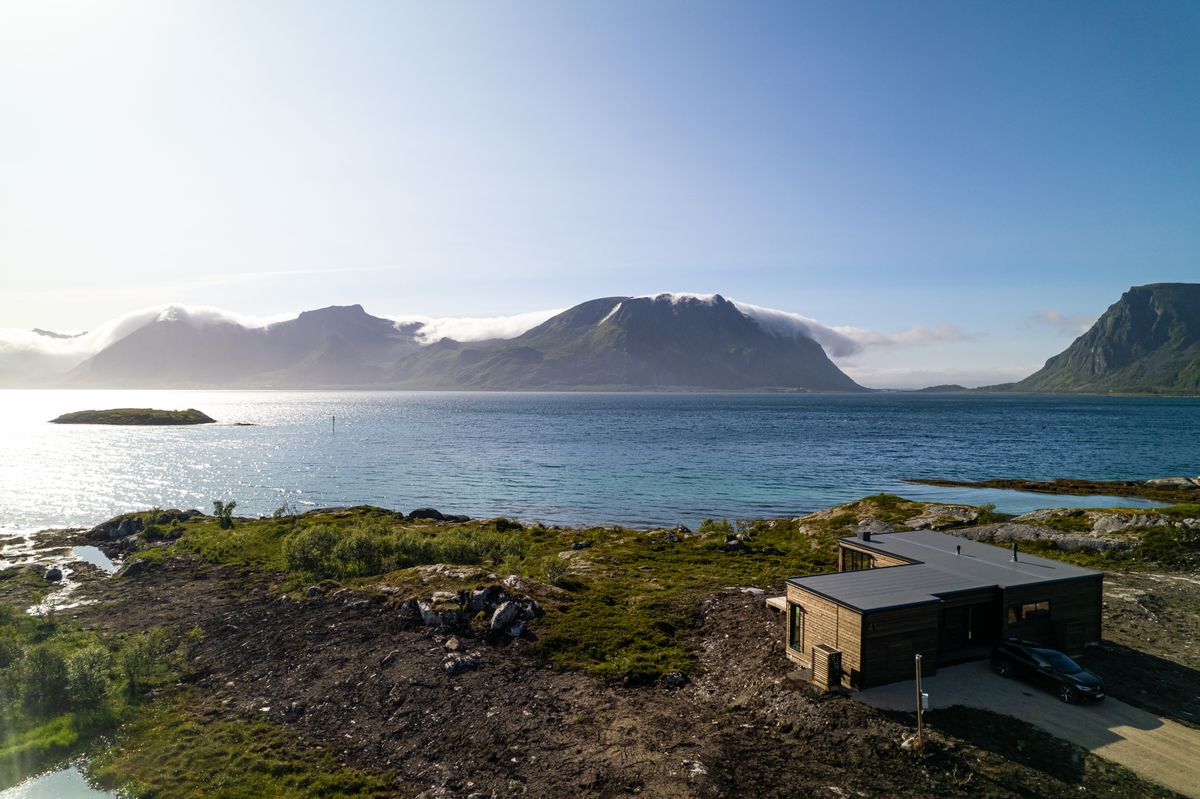
- You like having cafés, galleries and restaurants nearby – Henningsvær is about 15 minutes from our house in Lyngvær.
- You want calm: water, mountains across the fjord, and nobody around.
Or split your stay
If you have a week or more, this is what we recommend. Three or four nights in the west, three or four in the middle. You'll spend less time driving back and forth, and you'll see both sides of Lofoten properly. See our 7-day itinerary.
What about the northern lights?
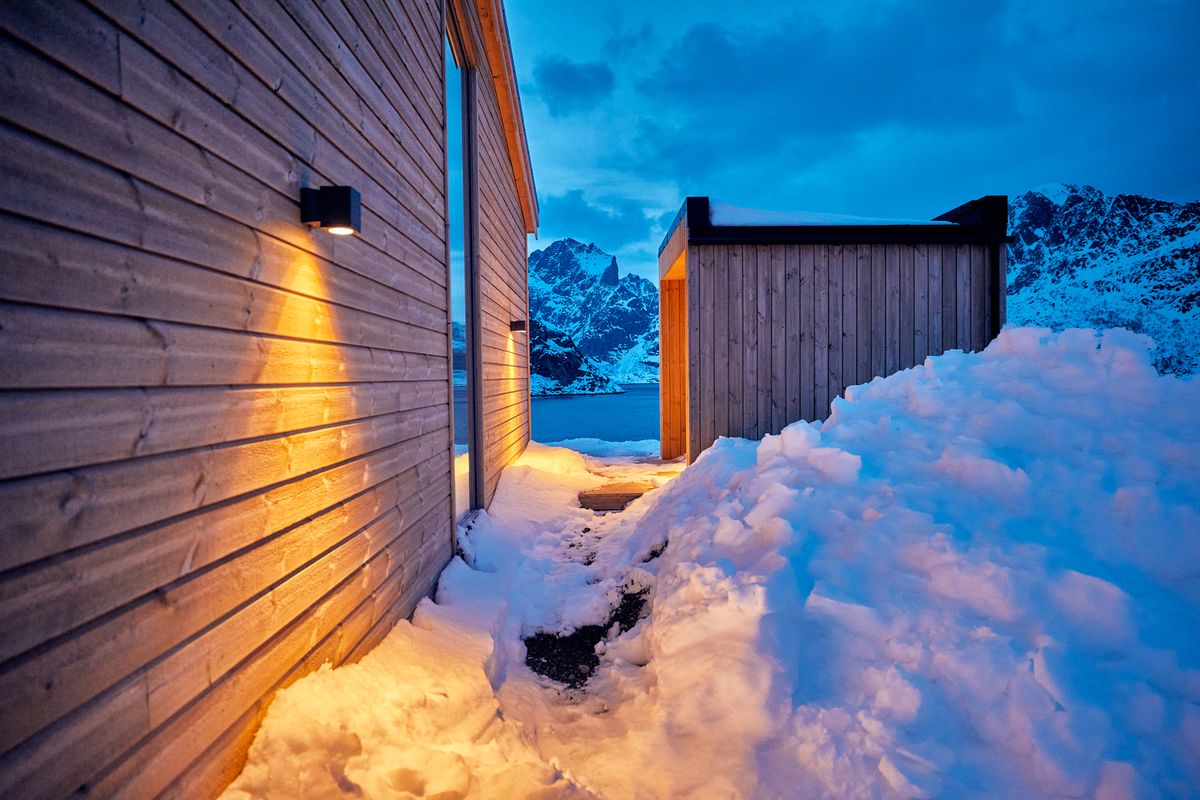
Both halves are excellent. The aurora doesn't care about the map – what you need is darkness, a clear sky and a view to the north. Stay somewhere outside the bigger towns, keep an eye on the cloud forecast, and be ready to step outside. More in our northern lights guide.
What about without a car?
Honestly: it's harder. Buses run along the E10 but not often. If you can't drive, Svolvær is the most practical base. Reine works if you're happy to hike and take the local boat to Vindstad.
Hotel, rorbu or private house?
Lofoten has everything from traditional fishermen's cabins (rorbuer) to hotels to private houses. If you're a family, a group of friends, or just want space and privacy, a whole house is hard to beat. We wrote a separate piece on rorbu vs. private house.
Good questions
What is the best area to stay in Lofoten?
There isn't one best area. The west (Reine, Hamnøy) has the most dramatic scenery; the middle (Henningsvær, Svolvær, Lyngvær) is more central with shorter drives. Many travelers stay in both.
Where should I stay in Lofoten without a car?
Svolvær is the most practical without a car – it has the most services and boat connections. Reine works too if you're happy to hike and take the local boat. Buses are infrequent everywhere.
Where to stay in Lofoten for the northern lights?
Anywhere away from town lights with an open view to the north. Both the west and the middle of the islands are excellent. Clear skies matter more than location.