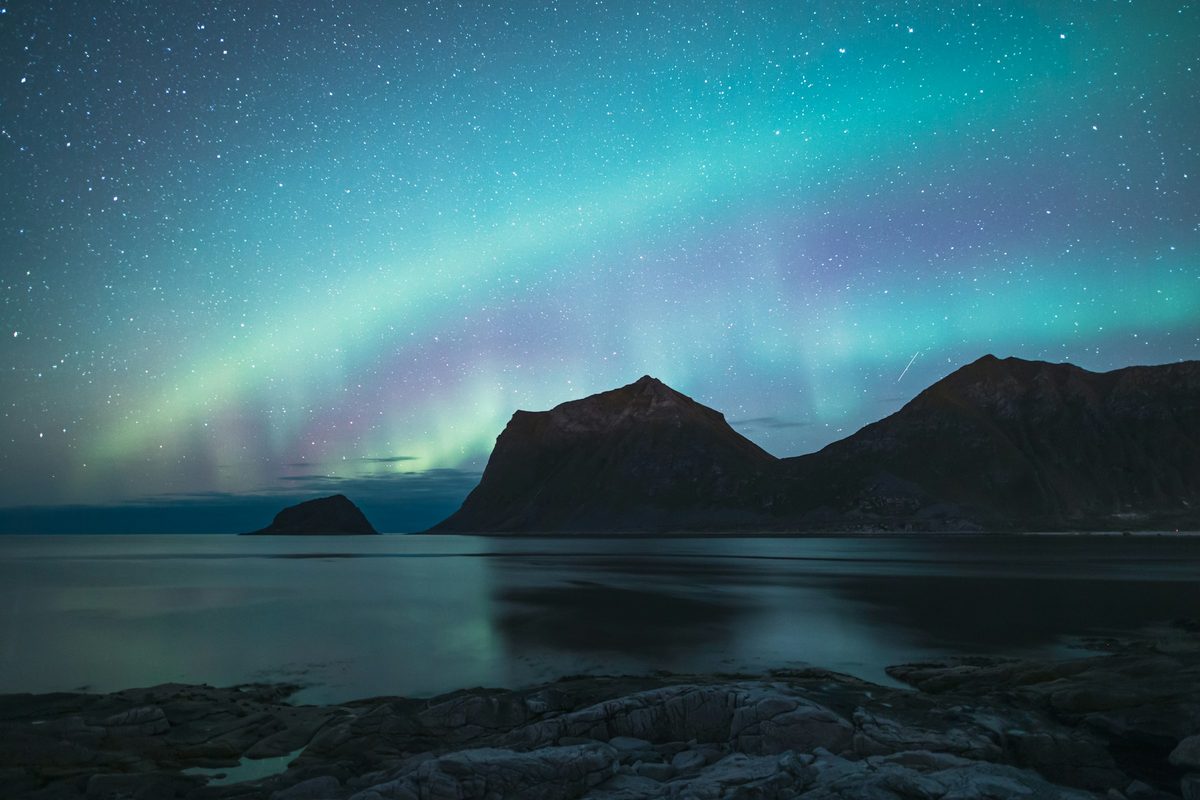
Northern lights
When to come, where to look and how to photograph the aurora in Lofoten.
In Lofoten you can see the northern lights from roughly late August to mid-April, whenever the sky is dark and clear. The aurora isn't predictable more than a few days out, so plan at least 4–5 nights, watch the cloud forecast more than the aurora forecast, and find a north-facing spot away from lights. Both our houses look out over open water with little light pollution.
When is northern lights season in Lofoten?
The northern lights happen all year, but you can only see them when it's dark. In Lofoten that means from roughly late August to mid-April. From late May to mid-July, the midnight sun makes it impossible; in early and late summer, nights are too bright.
Within the season, there's no single "best" month:
- September and October – milder nights, autumn colours by day, often reflections on calm water.
- November to January – the longest nights, so the most hours of darkness to catch activity. Around midwinter, the sun barely rises at all.
- February and March – snow on the mountains, longer days for sightseeing, and still plenty of dark hours. Many photographers' favourite.
What matters more than the month is clear sky. Lofoten's weather is coastal and changeable – a cloudy evening can clear in an hour.
How to improve your odds
- Stay longer. Give yourself at least 4–5 nights in the season.
- Watch the clouds, not just the aurora. Use the cloud cover map on yr.no – a clear patch matters more than a high activity number.
- Check the space weather. The Kp index and solar wind data (e.g. from NOAA) give you a feel for activity in the next hours; aurora apps can send alerts.
- Look north, away from lights. The aurora often appears as a pale arc to the north before it brightens and moves overhead.
- Be patient. Activity comes in waves. Dress warmly, go back in, check again in half an hour.
Where to watch
Anywhere dark with a view north. Near Reine, the beaches at Flakstad and Skagsanden are classics. In the middle of the islands, the open sky over Gimsøy is hard to beat. And honestly – the best spot is often right outside the house, between sauna rounds.
How to photograph the northern lights
- Tripod – non-negotiable.
- Manual focus set to infinity (check on a bright star, then tape the ring).
- Wide, fast lens – something like 14–24 mm at f/1.4–f/2.8.
- Start with ISO 1600–3200, 2–10 seconds. Shorter exposures when the aurora moves fast, longer when it's faint.
- Phones work – use night mode and rest the phone on something steady.
- Spare batteries in an inside pocket – the cold drains them.
- Foreground makes the picture: mountains, the water, the house.
What to wear
Warm base layers, a down jacket, a windproof shell, hat, gloves, warm boots. Standing still in the cold for an hour is colder than any hike. A thermos of something hot helps.
Good questions
When is northern lights season in Lofoten?
The aurora is active all year, but you need darkness to see it. In Lofoten that means roughly late August to mid-April. Clear skies matter more than the month.
Can I see the northern lights from the house?
On a clear night with aurora activity, yes – both houses face open sky over the water, away from city lights. Nobody can guarantee the aurora. The northern lights guide explains how to improve your odds.
When is the best time to visit Lofoten?
Depends on what you are after. Northern lights: roughly late August to mid-April, when nights are dark. Midnight sun: around late May to mid-July. Snow and winter light: January to March. Hiking: June to September. No season is a bad one – each is a different trip.
How cold does it get in winter?
Milder than you would expect above the Arctic Circle – the Gulf Stream keeps the coast relatively mild, and winter temperatures often hover around freezing. The wind is what makes it feel cold, so pack a windproof layer.
Facts last checked: 2026-10-09
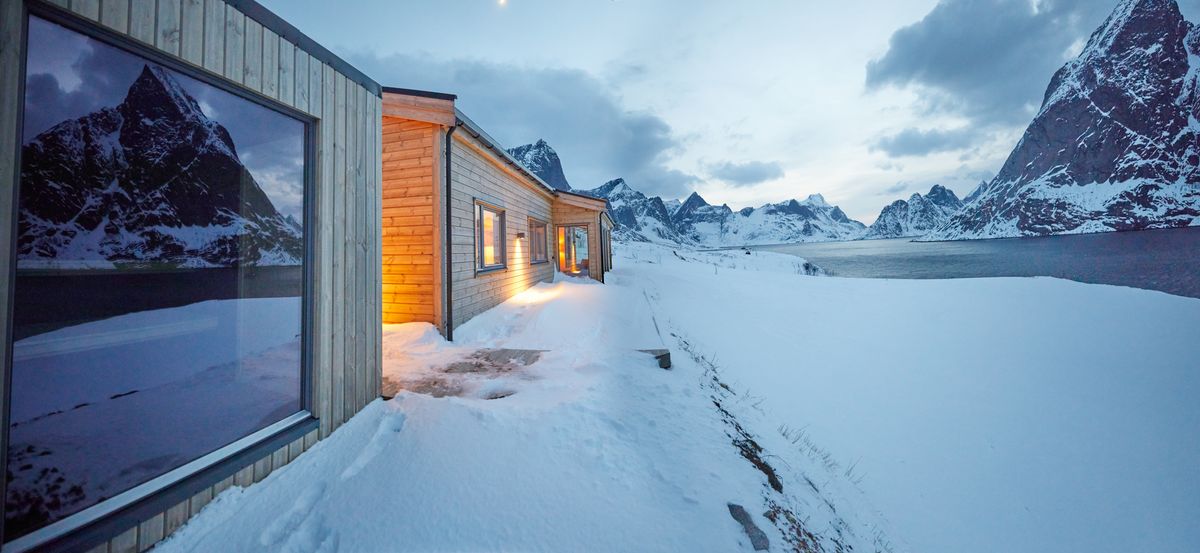
Wait for the lights indoors.
Sauna, candlelight, a big window – and nobody else's headlights. Check your dates.