Use a tripod, focus manually at infinity, and start at ISO 1600–3200, f/1.4–2.8, 2–10 seconds with a wide lens. Shorten the exposure when the aurora moves fast. On a phone, use night mode and rest the phone on something steady. Bring spare batteries, and build the picture around a foreground: mountains, water or a house.
There's nothing like the moment the sky starts to move. And there's nothing more frustrating than looking at your photos afterwards and seeing a green blur. Here's what actually works in Lofoten.
The gear
- A tripod. Non-negotiable for a camera. Even a small travel tripod is fine.
- A wide, fast lens. Something in the 14–24 mm range at f/2.8 or brighter. The aurora often fills the sky.
- Spare batteries. Cold kills them fast. Keep spares in an inside pocket.
- A headlamp with a red light – it won't ruin your night vision (or other photographers' shots).
- Warm gloves you can operate a camera with. Liner gloves under mittens work well.
Camera settings to start with
| Setting | Starting point | Adjust when… |
|---|---|---|
| Mode | Manual (M) | – |
| Focus | Manual, at infinity | Check on a bright star with live view zoom |
| Aperture | f/1.4–f/2.8 (widest) | – |
| ISO | 1600–3200 | Higher if faint, lower if very bright |
| Shutter | 2–10 s | Shorter when the aurora moves fast |
| White balance | 3500–4000 K | To taste |
| Format | RAW | – |
Fast, dancing aurora looks best with short exposures (1–4 seconds) – longer ones smear the detail. Faint, slow arcs can take 10–15 seconds.
Focus is where most photos fail
Autofocus doesn't work in the dark. Switch to manual, zoom in on a bright star in live view, and turn the ring until it's a sharp point. Then tape the ring so it doesn't move. Don't trust the infinity mark on the lens.
Phones
Phones have become surprisingly good. Use night mode, keep the phone absolutely still – lean it on a rock or a car roof – and let it take its long exposure. Some phones let you set the exposure time manually; try 3–10 seconds.
The foreground makes the picture
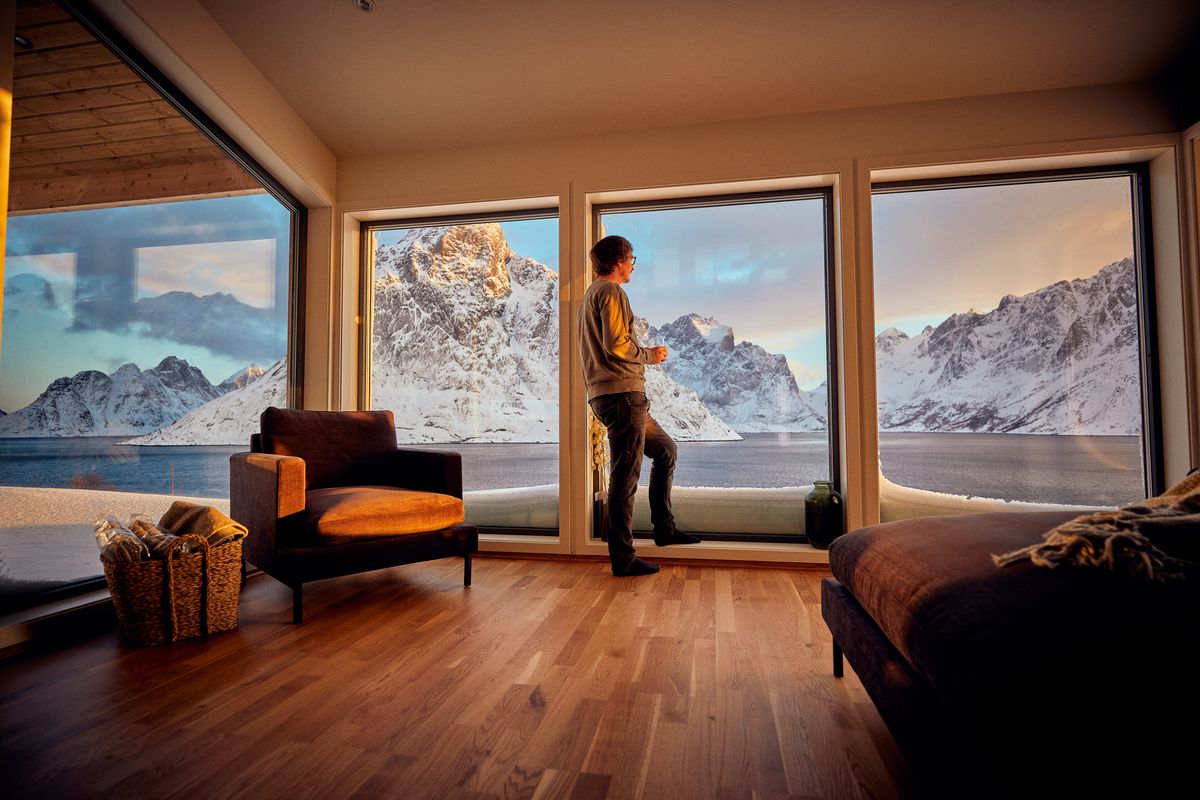
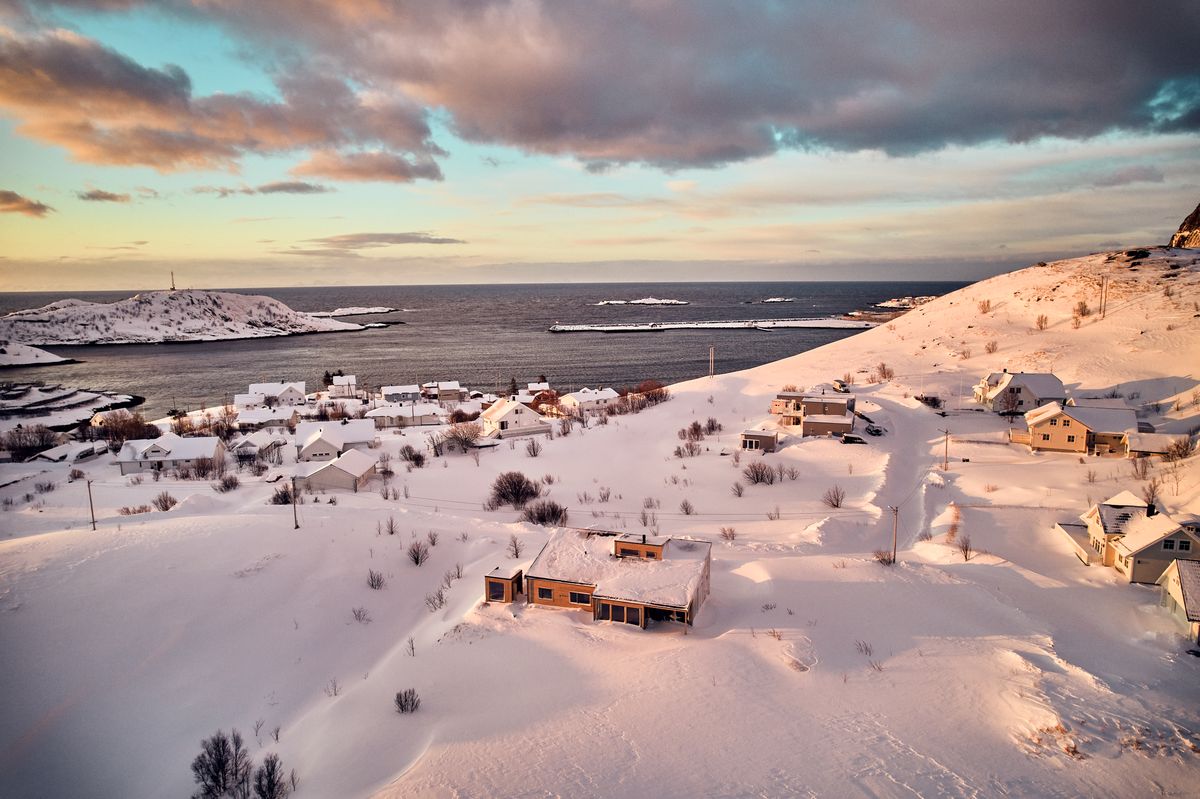
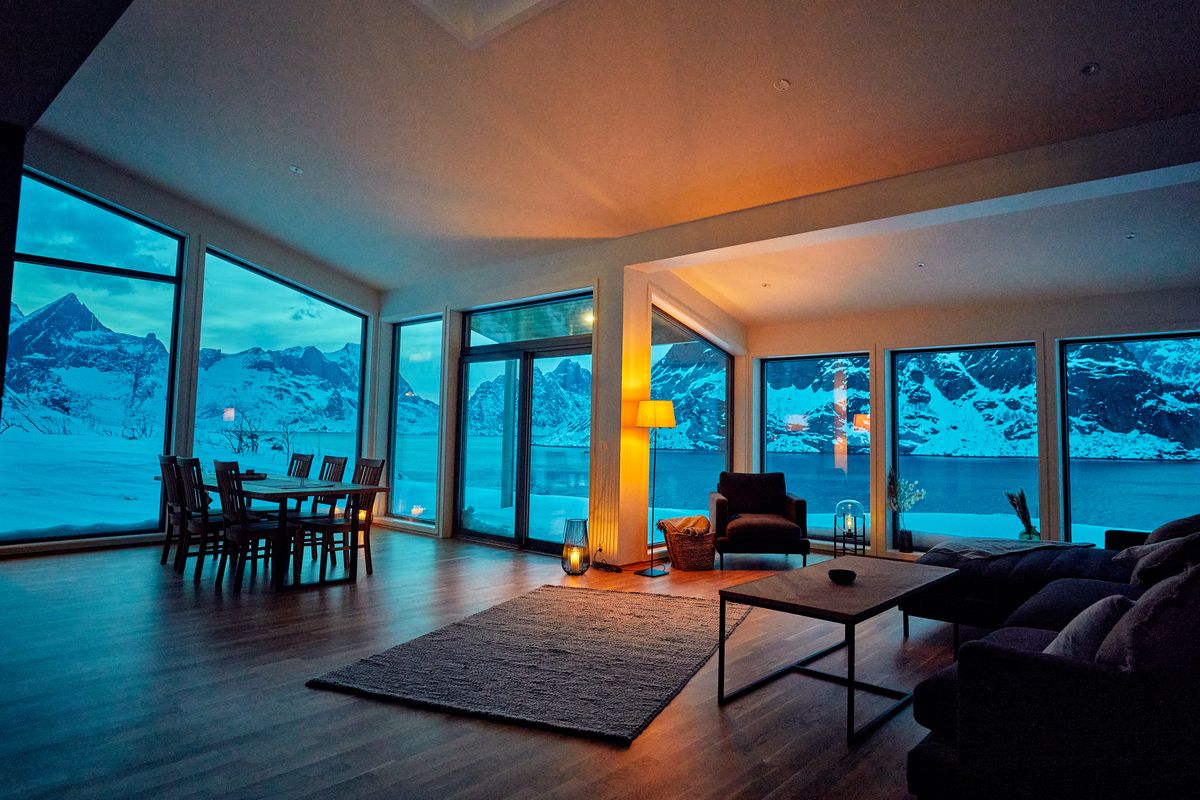
A sky full of green is nice. A sky full of green above a mountain, reflected in a fjord, with a lit window in the corner – that's a photograph. In Lofoten you're spoilt: peaks, beaches, fishing villages, the water. Scout your spot in daylight so you know where to stand at night.
Where in Lofoten
- Around Reine: the beaches of Flakstad and Skagsanden face north, with mountains behind.
- In the middle: Gimsøy has huge open skies; the shore at Lyngvær faces open water.
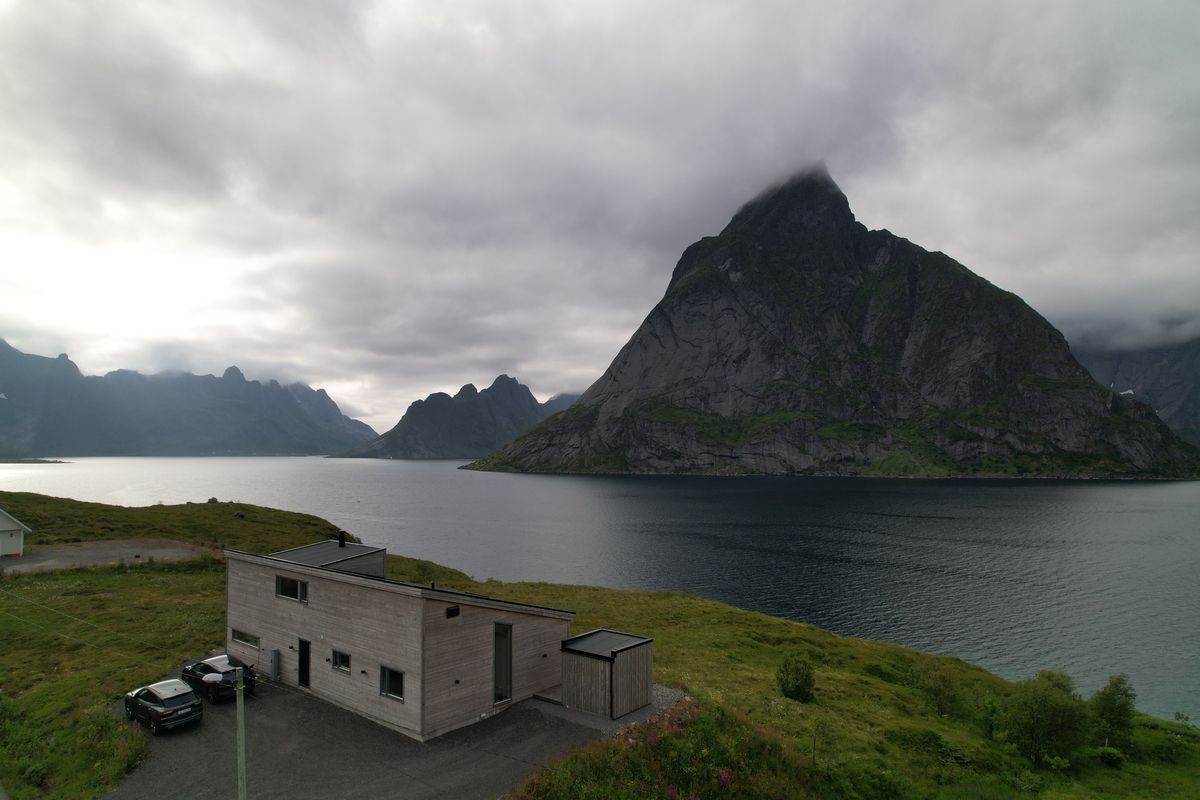
- From the house: honestly, some of our favourite nights were simply on the terrace, between sauna rounds.
Read our northern lights guide for when to come and how to read the forecast.
Be kind to the place
Park only where it's allowed, never on the road. Keep headlamps off when others are shooting. And stay off fragile ground and private property.
Good questions
What camera settings for northern lights?
Start at ISO 1600–3200, aperture f/1.4–2.8, shutter 2–10 seconds, manual focus at infinity, white balance around 3500–4000 K. Adjust to the brightness and speed of the aurora.
Can you photograph the northern lights with a phone?
Yes. Modern phones with a night mode do surprisingly well. Keep the phone completely still – lean it against something or use a small tripod – and tap to focus on a bright star or distant light.